Glucomannan is often discussed alongside weight management, but the most important details are frequently left out: the amount consumed, how it is taken, and the broader eating pattern. Understanding these details is more valuable than a dramatic promise on a label.
From konjac root to soluble fibre
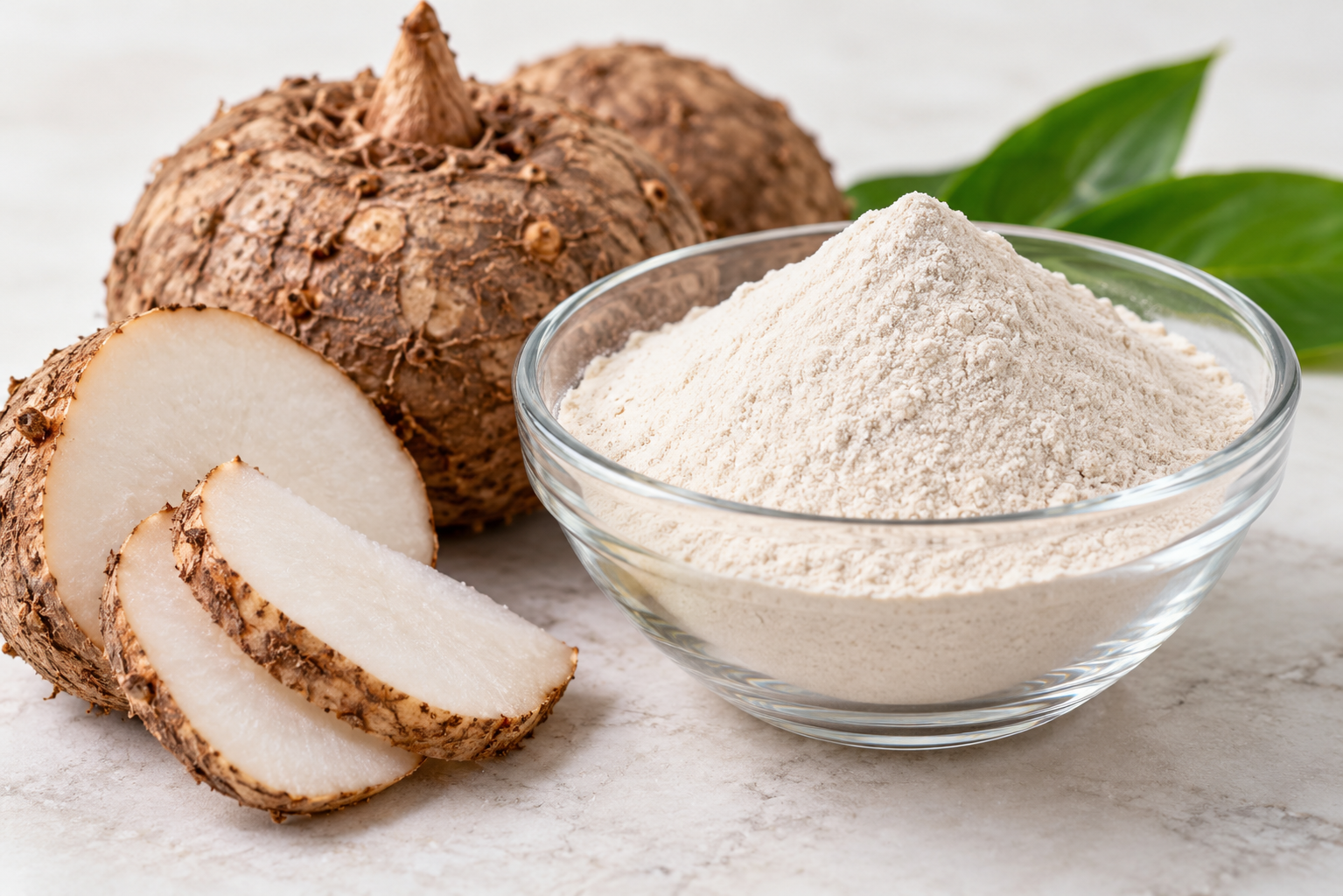
Glucomannan is a soluble dietary fibre obtained from the konjac plant. When mixed with liquid, it absorbs water and becomes viscous. This physical property helps explain why it has been studied in relation to eating patterns and weight management. It does not make glucomannan a substitute for a varied diet or an appropriate choice for everyone.
What the UK-authorised claim actually requires
In Great Britain, a specific authorised claim states that glucomannan in the context of an energy-restricted diet contributes to weight loss. This claim is subject to conditions: the food must contain 1 g of glucomannan per quantified portion, and the consumer must be told that the beneficial effect is obtained from 3 g daily in three doses of 1 g each, with 1–2 glasses of water before meals, as part of an energy-restricted diet. [1]
These are not optional details. A supplement containing some glucomannan cannot automatically be advertised as causing weight loss. Dose, directions, product presentation and all other conditions must first be checked against the current GB register and the actual label. The ASA has upheld complaints where glucomannan advertising did not meet the conditions. [2]
Why taking it with sufficient water matters
The authorised conditions require a warning about choking for people with swallowing difficulties or when the substance is taken with inadequate fluid. This reflects glucomannan’s ability to absorb water and expand. Always follow the directions on the exact product you are using; do not improvise a dose on the basis of a general online article. [1]
Anyone who has swallowing problems, a relevant medical condition or questions about interactions with medicines should seek advice from a qualified healthcare professional before use.
Dietary habits still come first
Weight management is influenced by energy intake, activity, sleep, circumstances and health. The NHS Eatwell Guide advises eating a variety of foods, choosing higher-fibre starchy carbohydrates, including fruit and vegetables and using suitable portions. A supplement cannot replace these foundations. [3]
A sustainable routine is usually one that is realistic: regular meals, dietary variety, movement that fits daily life and the flexibility to maintain habits over time.
How to read a formula responsibly
Before drawing conclusions from the ingredient name, check the amount of glucomannan per serving, the recommended daily intake, warnings and the other ingredients in the formula. Different products may contain combinations of botanicals and fibre, and the evidence or authorised claims for one ingredient do not automatically apply to the entire blend.
The Royal Vantis perspective
Trim Balance™ includes glucomannan as part of its formulation. This educational article explains the ingredient and the legal context; it does not establish that Trim Balance™ meets the conditions for an authorised weight-loss claim. Any product-specific claim must be assessed against the verified quantity per dose and the final UK label.